Unicef
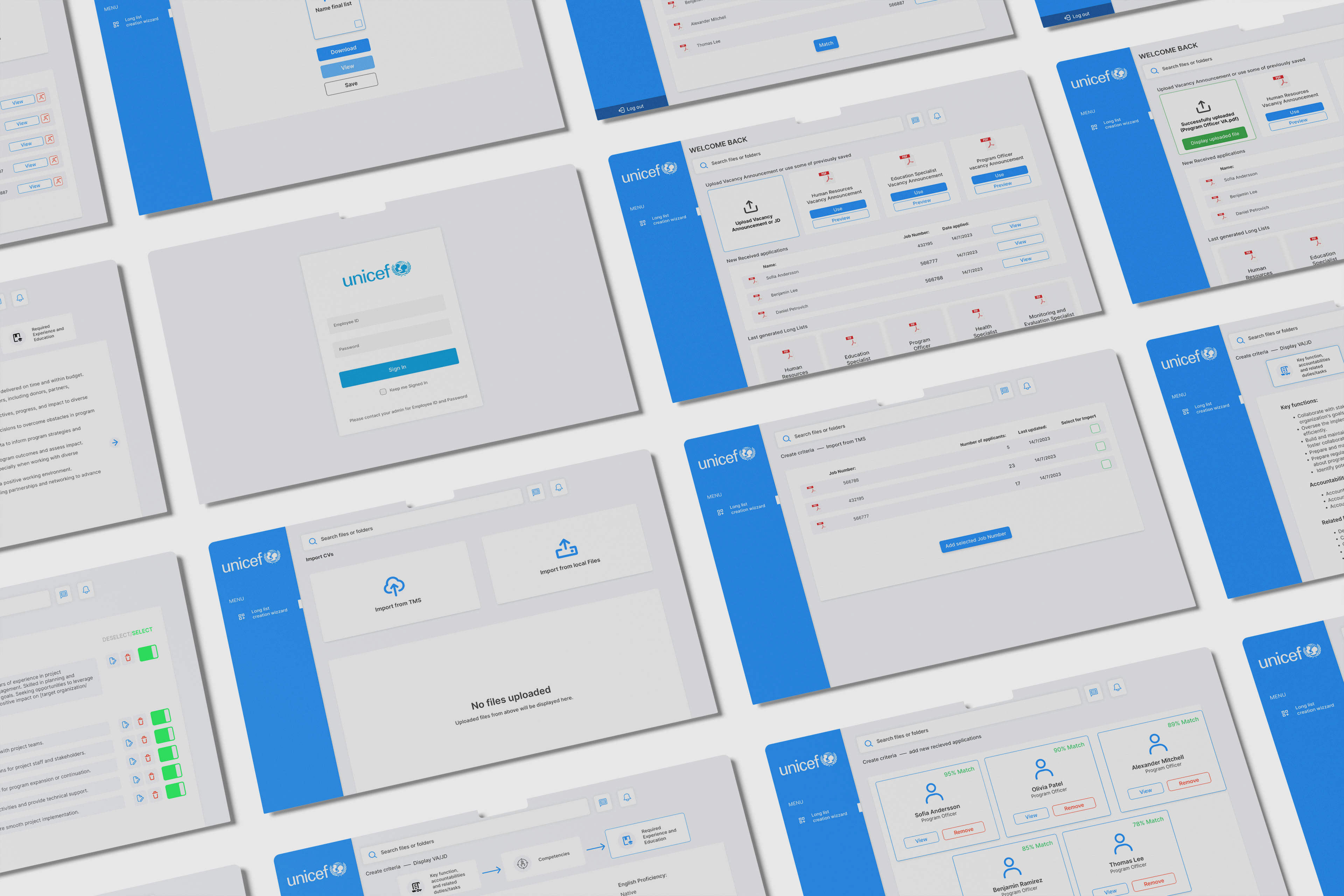
UX-focused project for UNICEF Hungary aimed at optimizing and automating their recruitment process. The project involved analyzing the existing hiring workflow, identifying usability issues and repetitive tasks, and designing a streamlined user flow that improved efficiency and clarity for HR teams. In close collaboration with UNICEF Hungary, we developed a web-based RPA bot as a solution for automating rule-based, repetitive actions within the recruitment process, reducing manual work while maintaining consistency, scalability, and a user-centered experience.
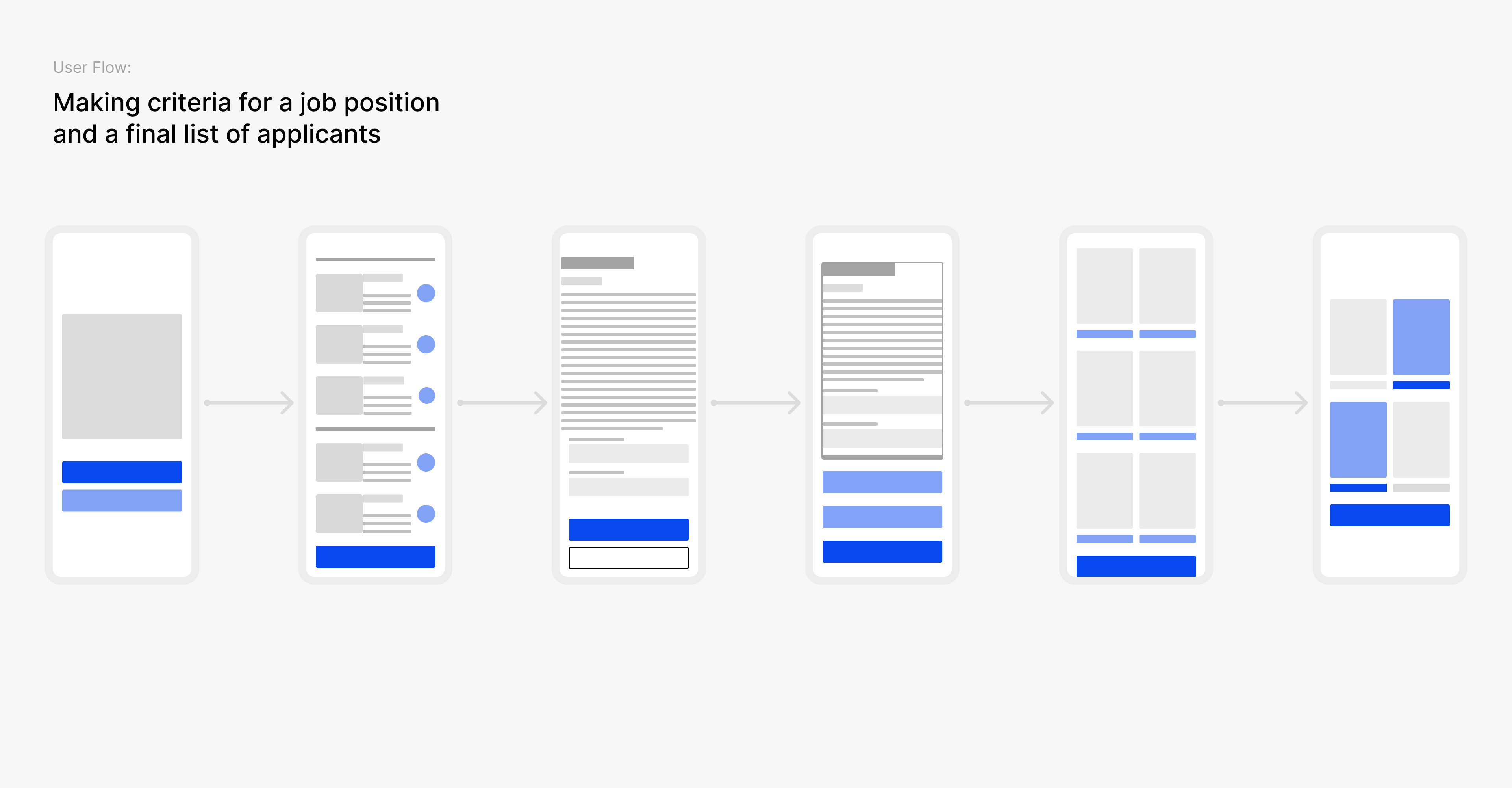
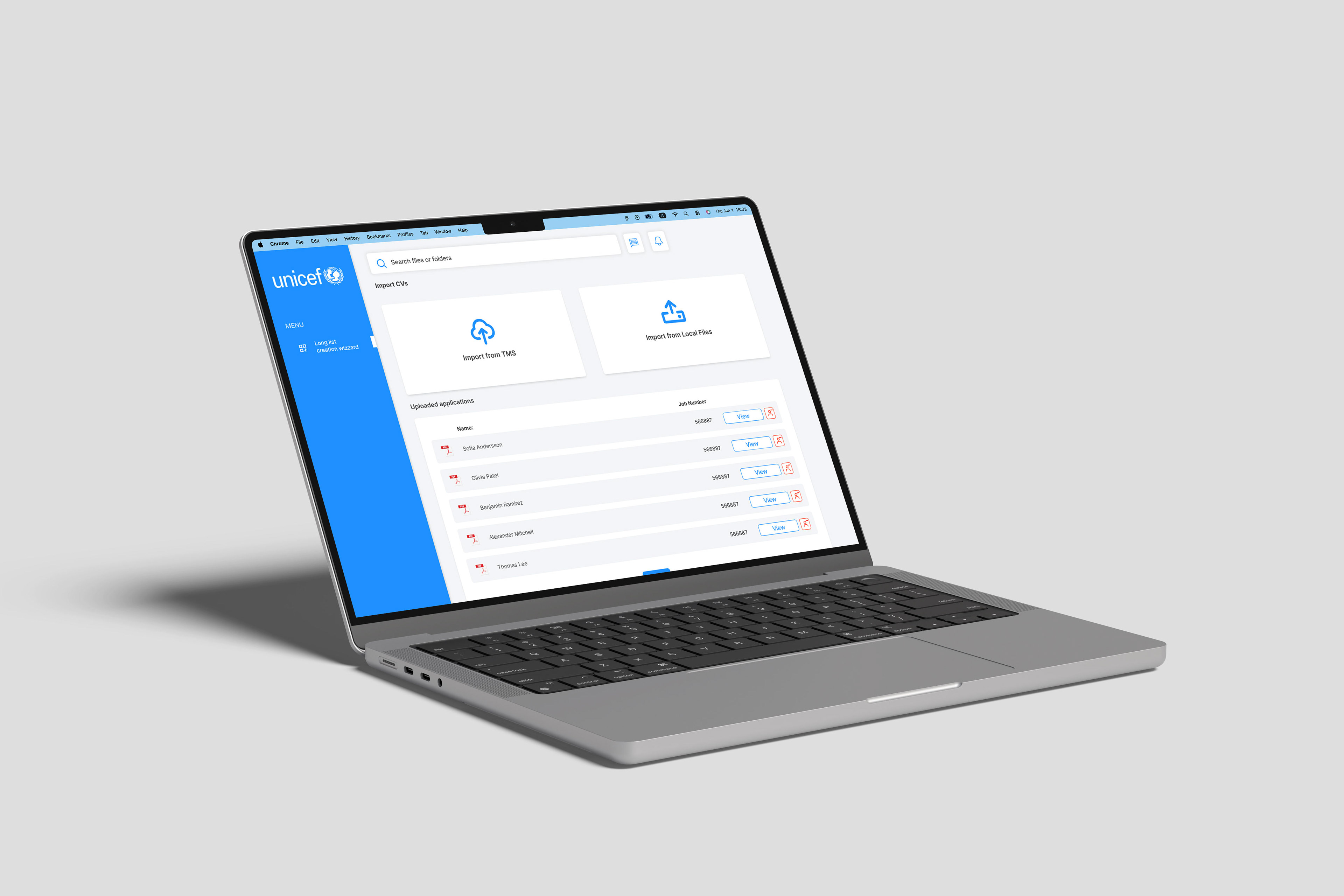
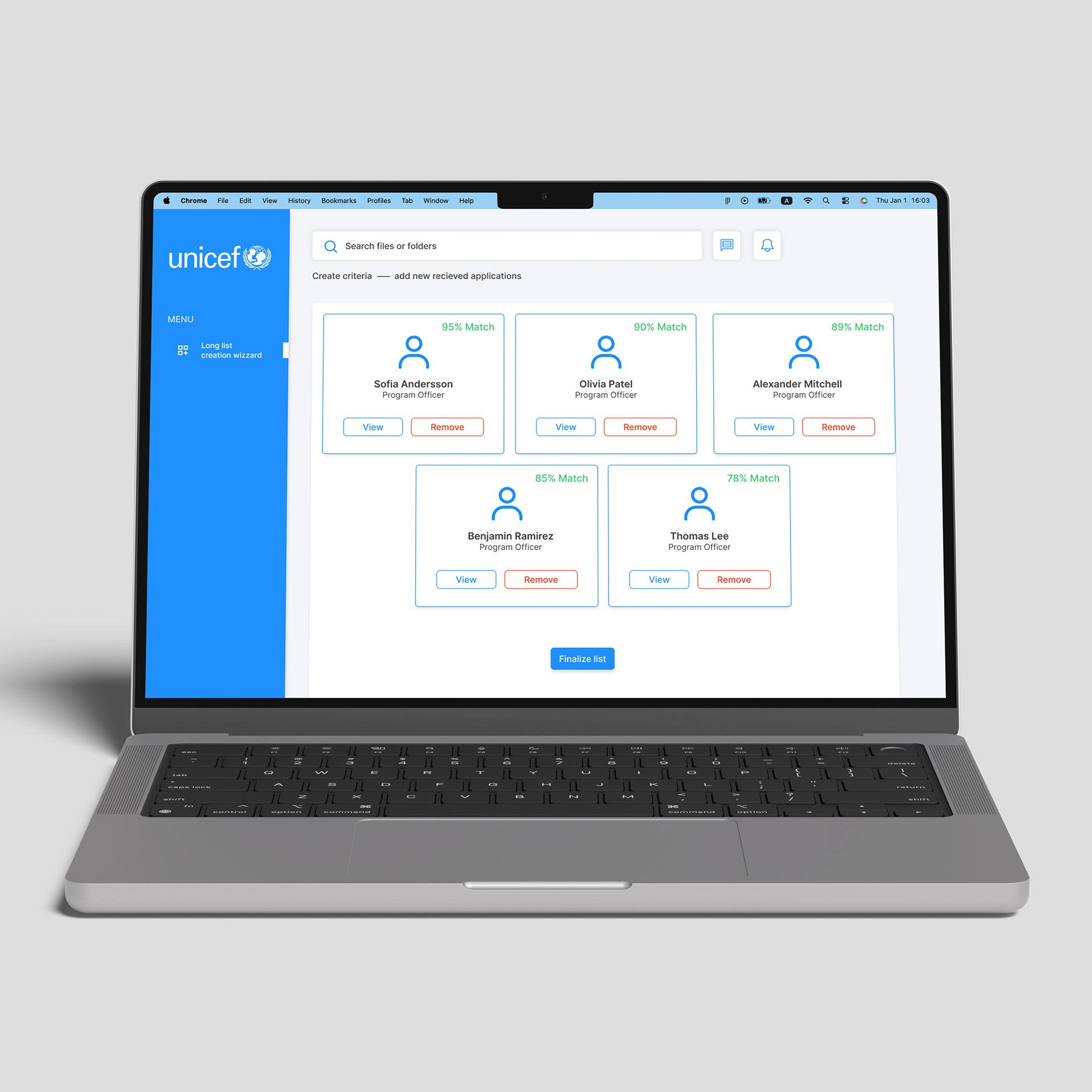
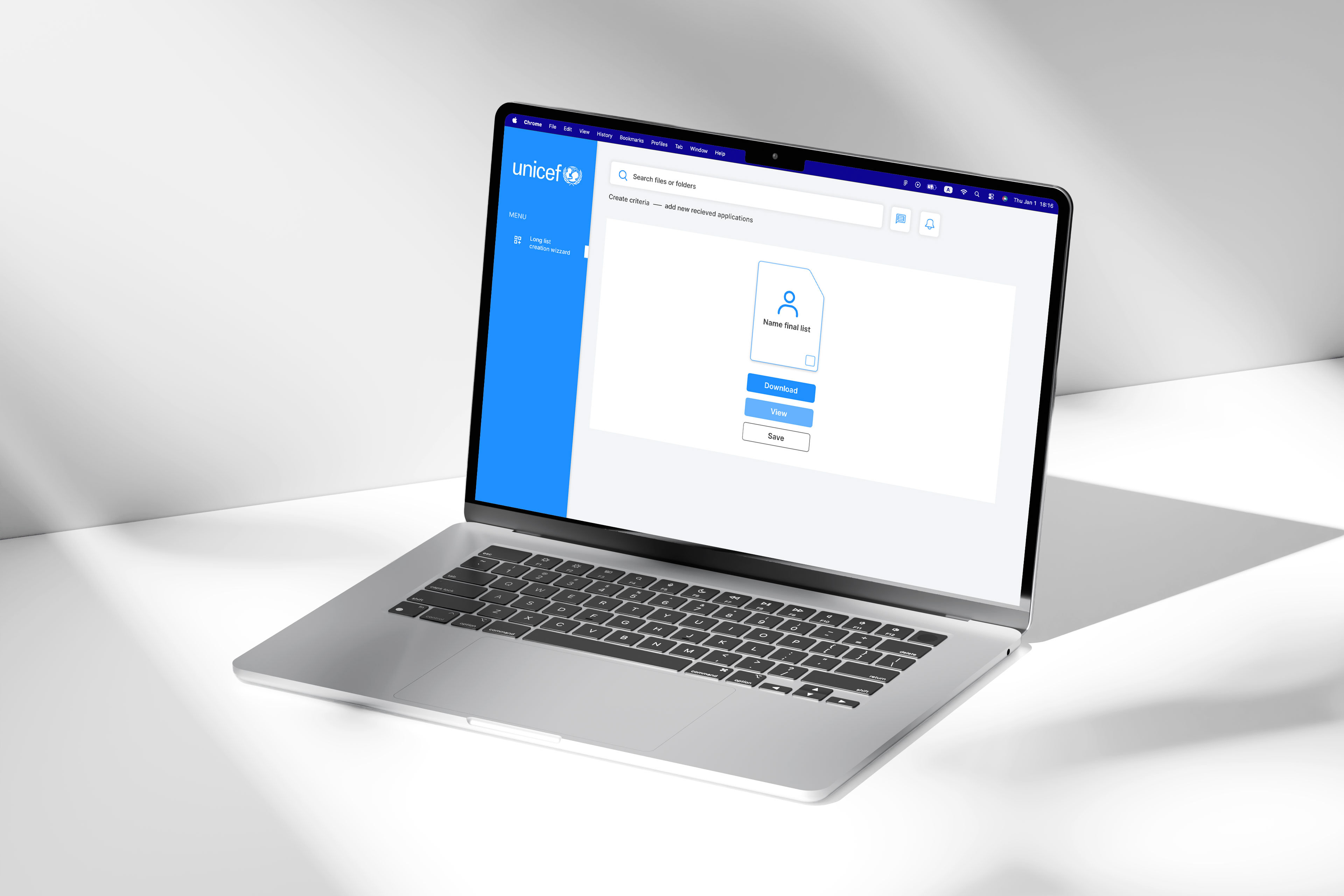
The recruitment process consists of six steps, starting with creating a Vacancy Announcement and adding relevant profiles, job descriptions, and similar candidates. The RPA system then generates role-specific criteria, evaluates incoming CVs, and produces a draft candidate list, which HRBP reviews and adjusts. Finally, the top candidates are finalized and saved for interviews, completing the automated six-step workflow.
How does RPA work?
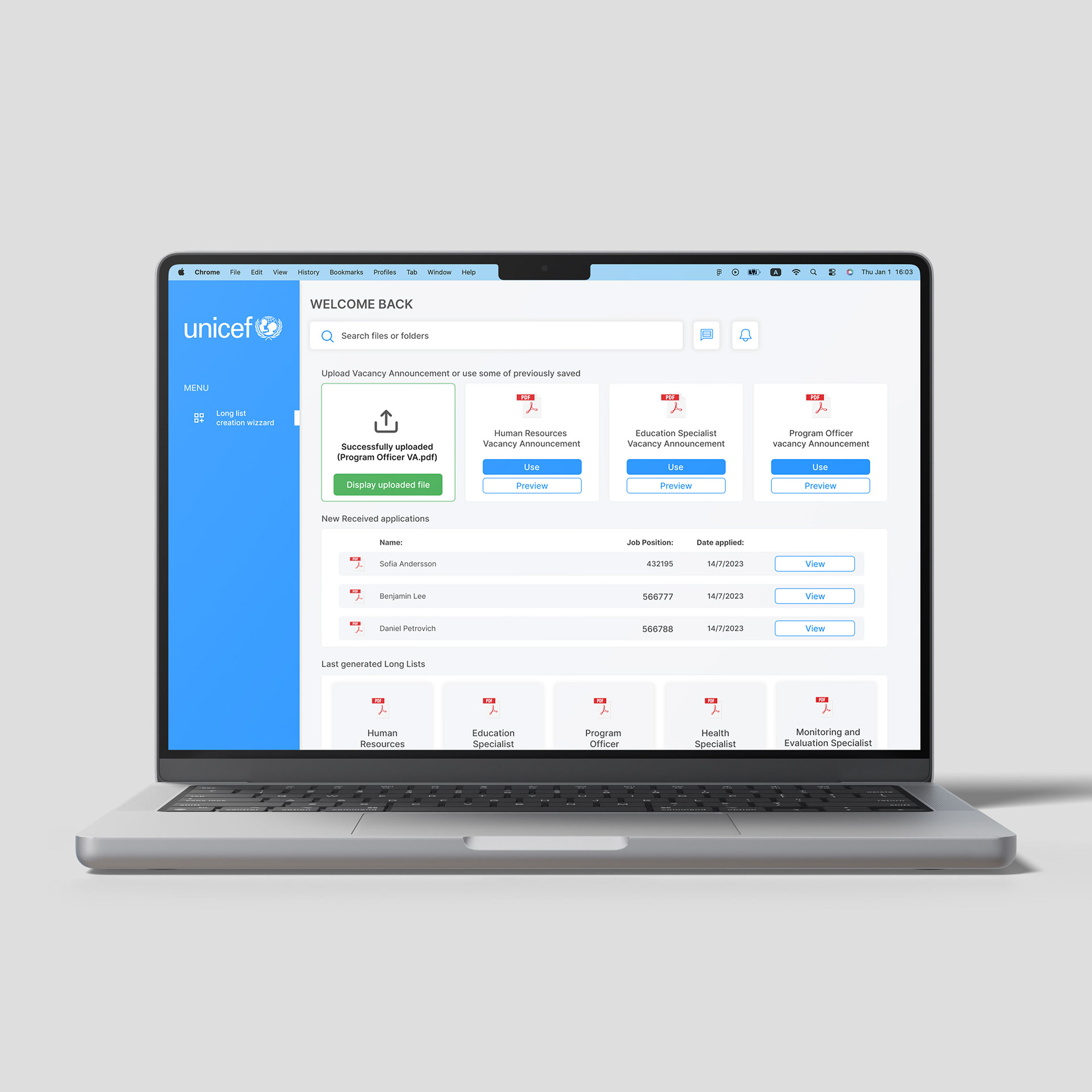
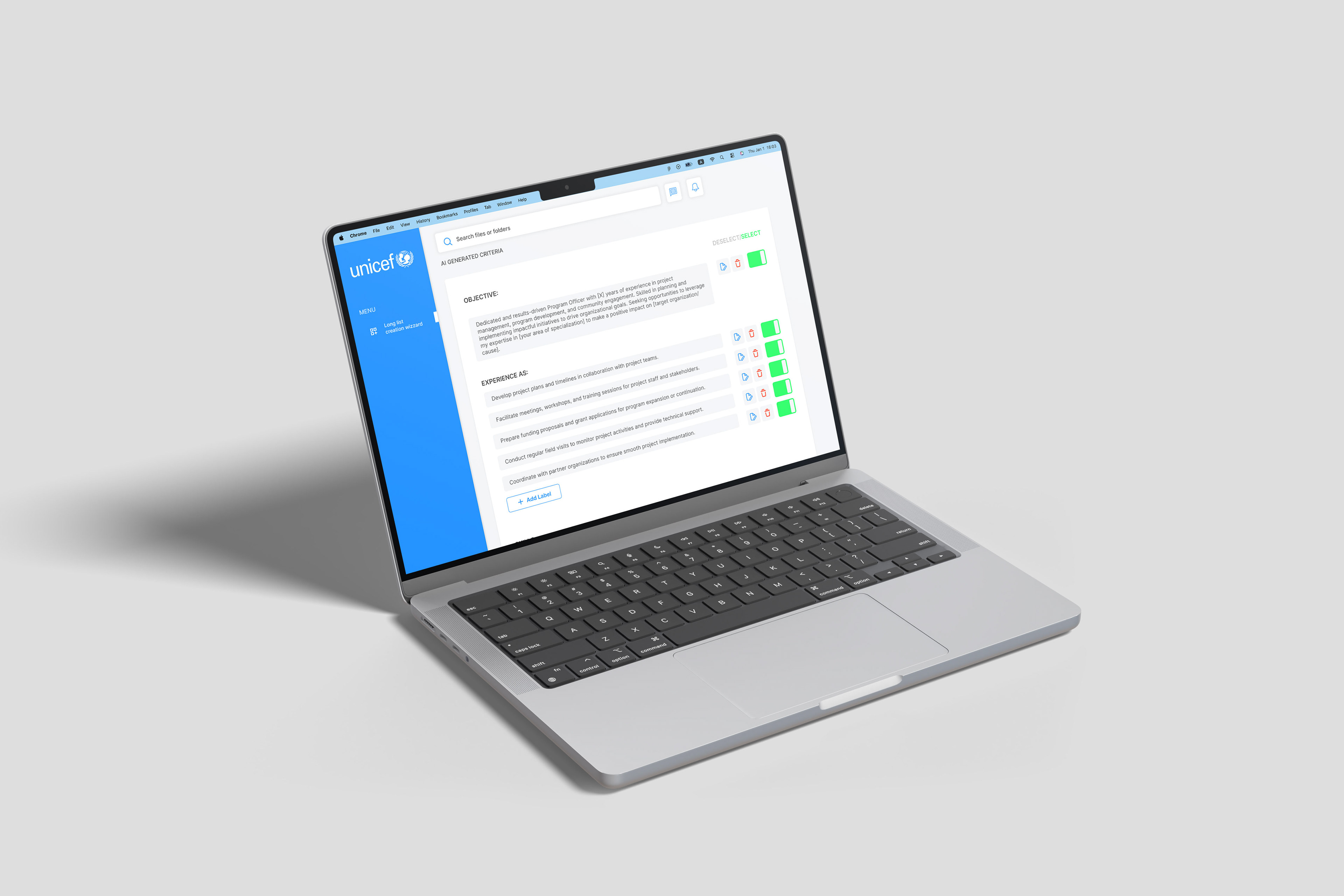
The RPA process begins at the home screen, where a Vacancy Announcement can be created or added, proceeding forward via a button. Next, the system displays a database of TMS profiles, including previously selected candidates as well as external vacancy announcements, job descriptions, and similar profiles, which are then added to the list. Based on the selected profiles, the RPA generates the Vacancy Announcement, allowing the HR Business Partner to review and edit it. Once completed, the Vacancy Announcement is ready, and the process can either continue to create criteria for the job posting or save it for future use.
The implemented solution reduced manual, repetitive recruitment tasks by approximately 25–35%, shortened administrative processing time across key stages of the hiring workflow, and improved overall process consistency through standardized, automated steps. Additionally, the automation lowered the risk of human error in rule-based actions, enhanced clarity and usability for HR teams, and provided a scalable framework capable of supporting future process adjustments with minimal effort.